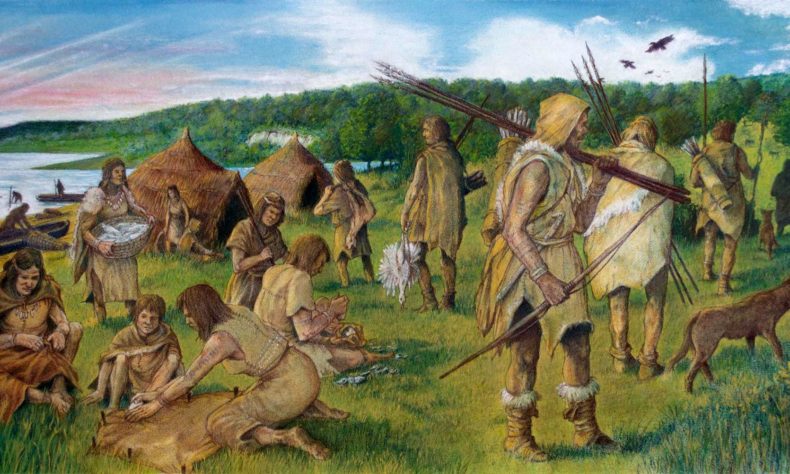
It is known that on a biological and physiological level, evolution is rather slow. Civilization, technology, culture, and society, on the other hand, move much faster. Sometimes so fast that it’s hard to keep up.
To put this into perspective, it takes about one million years for evolutionary change to happen in a species. Present-day humans have only been around for about 200,000 years. Yet we’ve come to see drastic changes in both our lifestyle and environments in just decades or even only a few years. Therefore, our bodies and brains are accustomed to a way of life we’ve moved past as a society. Let’s dive into this with a few examples.
Nutrition
Throughout evolution, food was scarce, and to find food, people had to work for it. Sometimes this meant hunting, scavenging, or walking and running for miles to find food. When people did get food, they didn’t know when their next meal would be. Therefore, to decrease the likelihood of starving to death, high-calorie foods were what people navigated towards. We evolved to crave calorically dense, fatty foods. And because the body was more prone to starvation during evolutionary times, it was necessary to eat as much as possible when food was available, store it, and preserve energy when needed.
However, life is different now. And thank God for that. Hunting, gathering, and all that other bullshit sounds miserable. I much prefer walking to the kitchen to make a meal or snack than wandering through the woods half naked for miles to kill an animal and eat a few seeds off the forest floor. But in all reality, life truly is different now. In most scenarios, food is readily available. We don’t have to go on a voyage for miles upon miles to get an energy-dense meal. We just have to walk to the kitchen or go through the drive-thru.
Movement and Exercise
Throughout history, people had to move their bodies to survive in the wild. Hunting and finding food, as I mentioned above, was very laborious. Climbing, running from prey, fighting, and moving heavy objects were also ways people moved naturally during the day. As we can see, our body wasn’t evolved for 40 hours a week behind a desk and a laptop. Especially when that’s met with coming home to sit some more and swapping the laptop for another, larger or smaller screen. But I will say, 8 hours behind a laptop does sound better than being chased by a lion. But barely.
The contemporary work culture of an average American working a 9-to-5 does no favors for our muscles, joints, posture, or overall health. And the pain that these issues can lead to further reduces our ability to be physically active while also propelling forward the opioid epidemic (overprescription of pain medications), and contributes to high healthcare costs.
Sleep
Sleep used to be strictly regulated by temperature and daylight. People slept when it was dark and woke up with the sun. Our brains were also less stimulated as we didn’t have social media, TV, and other distractions keeping us up at night. This made falling and staying asleep much easier than it is today. Now, due to the changes in environment and lifestyle, an estimated 50-70 million Americans have sleep disorders such as insomnia, sleep apnea, or restless legs syndrome.
Anxiety, Stress, and Fear
In ancient times, the body was regularly exposed to fear due to predators and the need to survive. The fear response was highly effective at keeping people alive. However, fast forward to the present day, and we aren’t being chased by bears all that often. At least not me, personally.
Present day, we’re typically pretty safe. Our fear and anxiety are triggered by things such as work, social settings, public speaking, life changes, and similar experiences. Nothing that actually threatens our lives.
How can we apply this knowledge to live healthier lifestyles?
To feel better, we must live better. We can’t actively treat ourselves like shit and expect immaculate health and fantastic outcomes. And I believe a big part of “living better” is to live a life aligned with that for which we have evolved. Meaning movement, good sleep, a well-rounded diet, and managing unnecessary stressors.
Nutrition
When it comes to nutrition, try eating more of what we evolved to eat. And please don’t take this the wrong way. I’m not promoting some bullshit carnivorous diet or eating raw meat and berries every meal. What I mean is to just incorporate more whole foods into your diet. Eat more fruits, vegetables, nuts, seeds, whole grains, meat, and dairy products. Because these foods, alongside whatever else you love to eat, are still a healthy diet. Health is not black and white. And a diet with no room for fun, enjoyment, or satisfaction is not healthy, but rather the opposite. I also have major beef with the carnivore diet (pun intended), but we can discuss that another time.
Movement and Exercise
Our bodies feel better when we’re active. So find ways to be more active. Go to the gym or for a walk after work. Start taking the stairs or parking farther away. Take up gardening, hiking, running, or other active hobbies. These are all great for our cardiovascular health and the physical body, as well as our mental health. Other benefits of exercise include reduced anxiety, increased strength and energy, joint health, and improved mood.
Sleep
To improve your sleep, avoid caffeine and bright screens late in the day. Create a relaxing bedtime routine, optimize your sleep environment, get enough sunlight, and avoid napping if possible.
Anxiety, Stress, and Fear
To get your stress and anxiety under control, it will be helpful to eat a healthy diet, exercise regularly, get adequate sleep, limit caffeine and alcohol, practice relaxation techniques, seek social support, and pursue professional help if necessary.
******
Wow, wow, wow. Thanks for reading! I learned so much from writing this little post, and I hope you all learned a little something too.
If you want to learn more about wellness, check out my post What Are the Dimensions of Wellness, or check out all my wellness-related blog posts here!